TAL Buyers Network
Helping professional vehicle buyers find and act on the right inventory
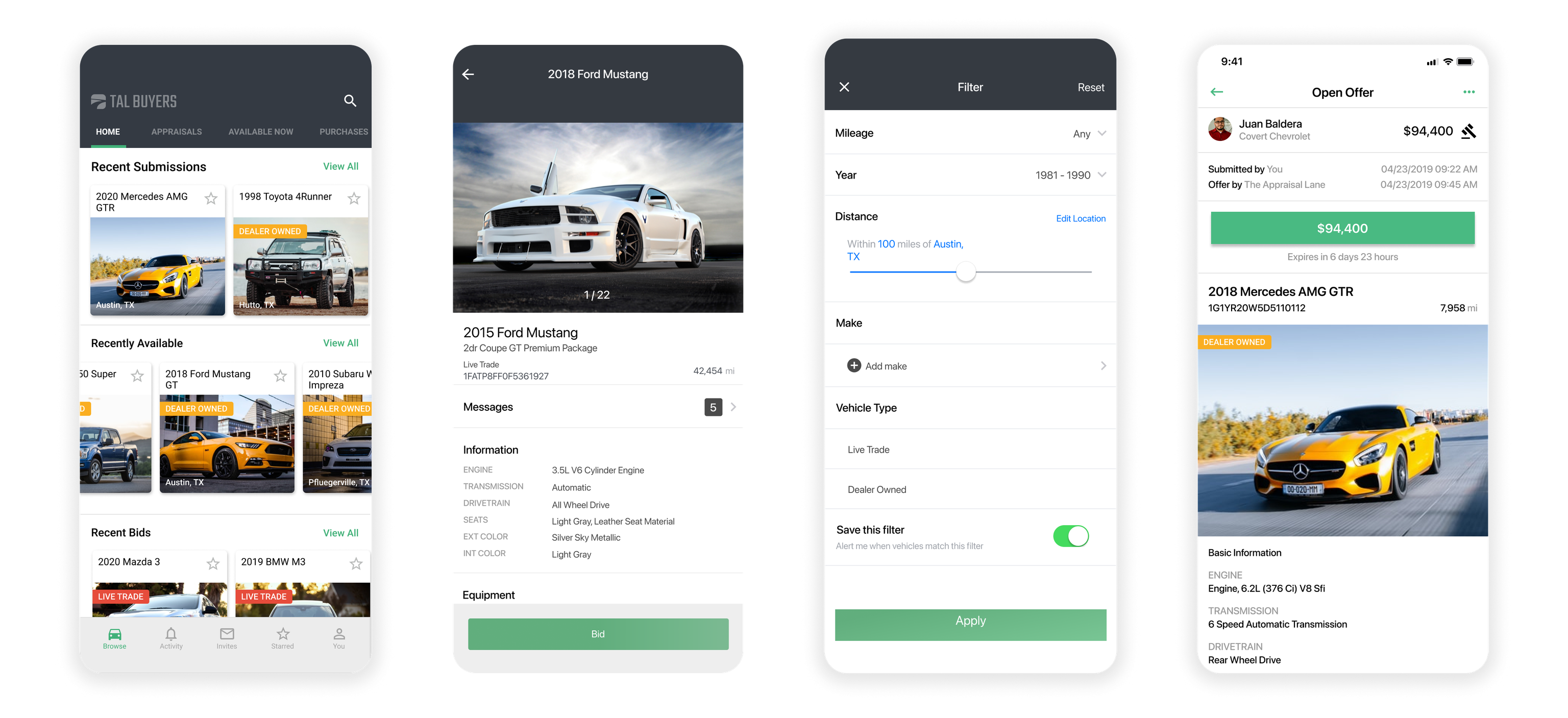
I designed and helped ship a mobile marketplace that connected The Appraisal Lane's vehicle inventory with approved automotive buyers.
01. Overview
Connecting trade-in inventory with professional buyers
Car dealerships regularly take vehicles in trade that do not make sense for their own used-car lots. A Toyota dealership might accept a BMW to complete a sale, for example, even if it does not want to stock that car or cannot offer as much for it as a BMW dealership might.
The Appraisal Lane gave dealerships another option. A dealer could photograph a trade-in, complete a condition report, and submit the vehicle through the app. Our appraisal team would review it and make a cash offer. The dealer could then decide how to use that offer in its transaction. If the dealer accepted it, The Appraisal Lane purchased the vehicle and needed to find the right buyer for it.
When I joined, professional buyers could view available inventory on a basic website and contact an account manager to discuss a vehicle or negotiate the listed price. The experience worked, but it expected buyers to keep checking the site. That did not fit how many of them worked.
Most of these buyers were not sitting at a desk all day. They were sourcing vehicles for independent used-car lots, dealership used-car departments, wholesale operations, or their own auctions. They also tended to have a sweet spot. One buyer might want late-model trucks under a certain mileage, while another might focus on a specific brand, body style, or price range.
We saw an opportunity to make that process more targeted and useful on a phone.
Pan and zoom to explore the appraisal and inventory workflows, or expand the diagram to full screen.
02. Key challenges
Matching inventory before it loses value
As The Appraisal Lane added dealerships, more appraisals and more vehicles moved through the business. Inventory was limited by the amount of capital available to hold it, and every vehicle was a depreciating asset. We needed to connect vehicles with interested buyers and move accepted inventory through disposition as efficiently as possible.
The product needed to help buyers:
- Browse available vehicles from their phones
- Define the types of vehicles they wanted
- Save those preferences for later
- Receive a notification when a matching vehicle appeared
- Express interest or submit a price, depending on the vehicle's state
The existing website already supported basic inventory browsing. Saved filters, notifications, and pre-bids were new capabilities, and the website also needed to gain more useful filtering.
03. Role
Leading product definition, design, and delivery
I was the Product Manager, but I was also the UX designer because we did not have one when the work began.
I defined the product with our leadership and domain experts, designed the iOS and Android experiences in Sketch, wrote epics and user stories in Confluence, and created Jira tickets across mobile, backend, and web administration work. I also scheduled implementation reviews with our senior architect and mobile engineers, incorporated their feedback, and worked with the team through sprint demos and release.
Engineering owned implementation and technical decisions. Customer-facing team members who worked with buyers handled account creation and onboarding because the app was publicly listed, but users could not create their own accounts.





04. Discovery
Learning from people who knew the market
We did not have a formal research practice, so I relied heavily on people inside the company who had direct experience buying and selling used vehicles.
Several members of the sales team had worked as used-car sales managers. One of our founders was a wholesale vehicle buyer who operated his own auction. I used their input to understand how buyers evaluated inventory, which attributes mattered, and whether the filters and vehicle views made sense for the way they worked.
This helped us move beyond the simpler lookup patterns in the dealer-facing product. A dealership submitting a vehicle might mainly need make, model, or VIN. A buyer deciding whether to stock it cared about more detail, including mileage, exterior color, interior or seat color, vehicle type, and pricing status.
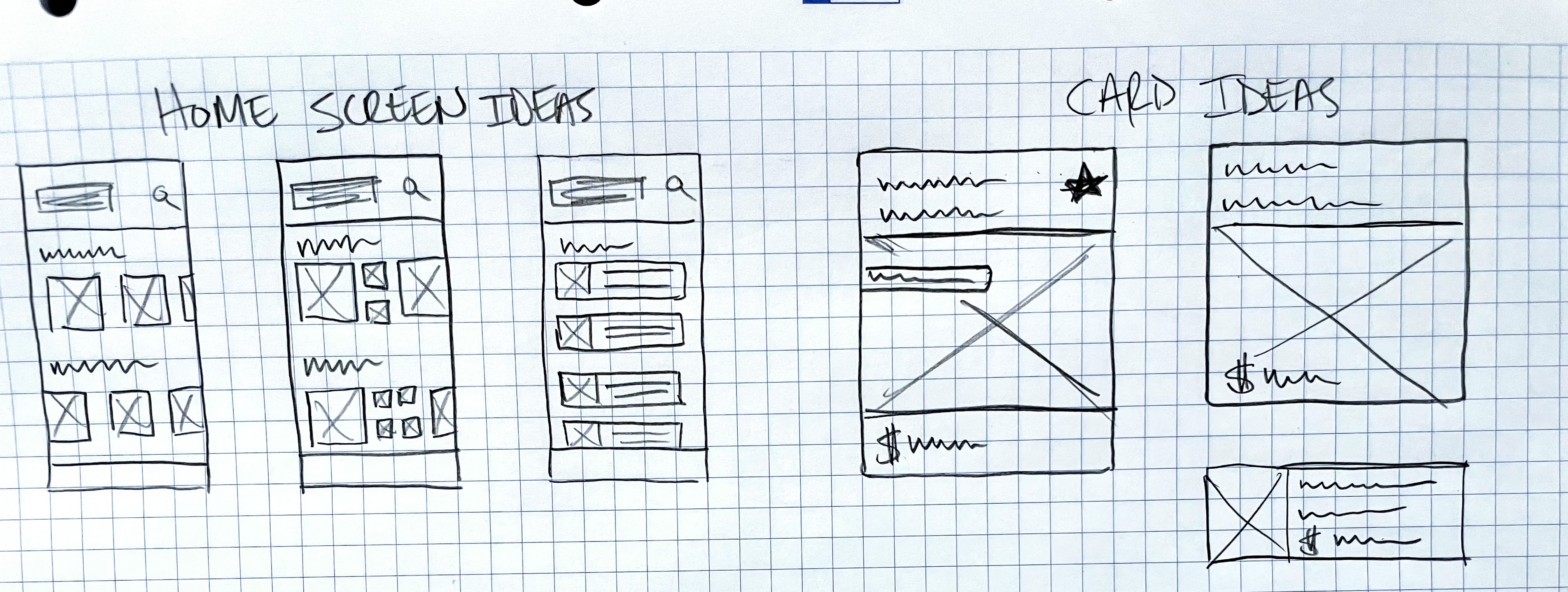
Exploring the layout on paper
I used quick sketches to explore home-screen layouts and vehicle cards before refining the interface. These drawings capture alternatives for presenting inventory and the information within each card.
05. Saved filters
Turning buyer preferences into saved filters
Saved filters became the main interaction problem I worked through.
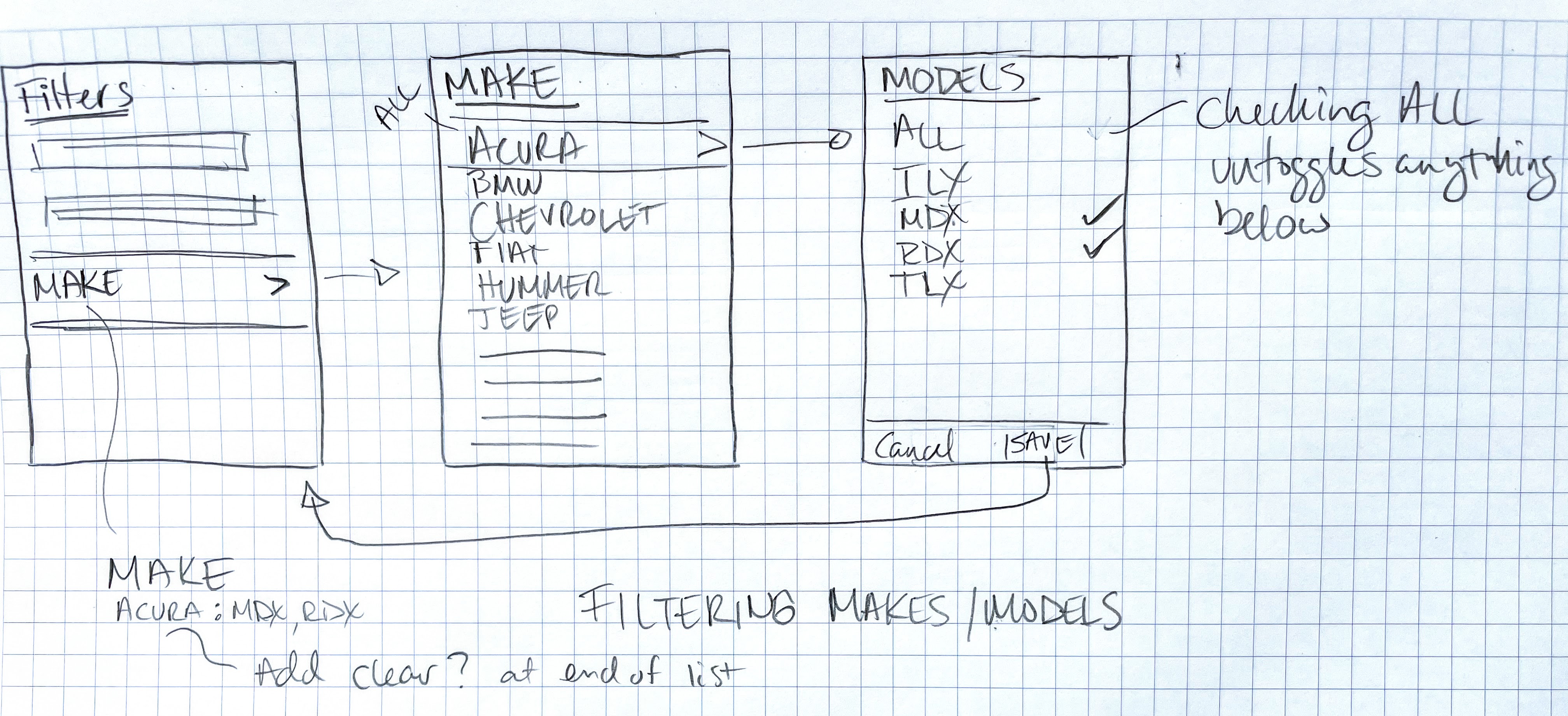
Buyers needed granular control, but they should not have to rebuild the same search every time they opened the app. I designed a flow that let them select the attributes they cared about, save and name that combination, and control whether it should generate notifications.
A buyer could then manage several sourcing strategies at once. Instead of repeatedly searching the full inventory, they could return to a saved filter or respond when the app told them that a matching vehicle had arrived.
The flow connected five moments:
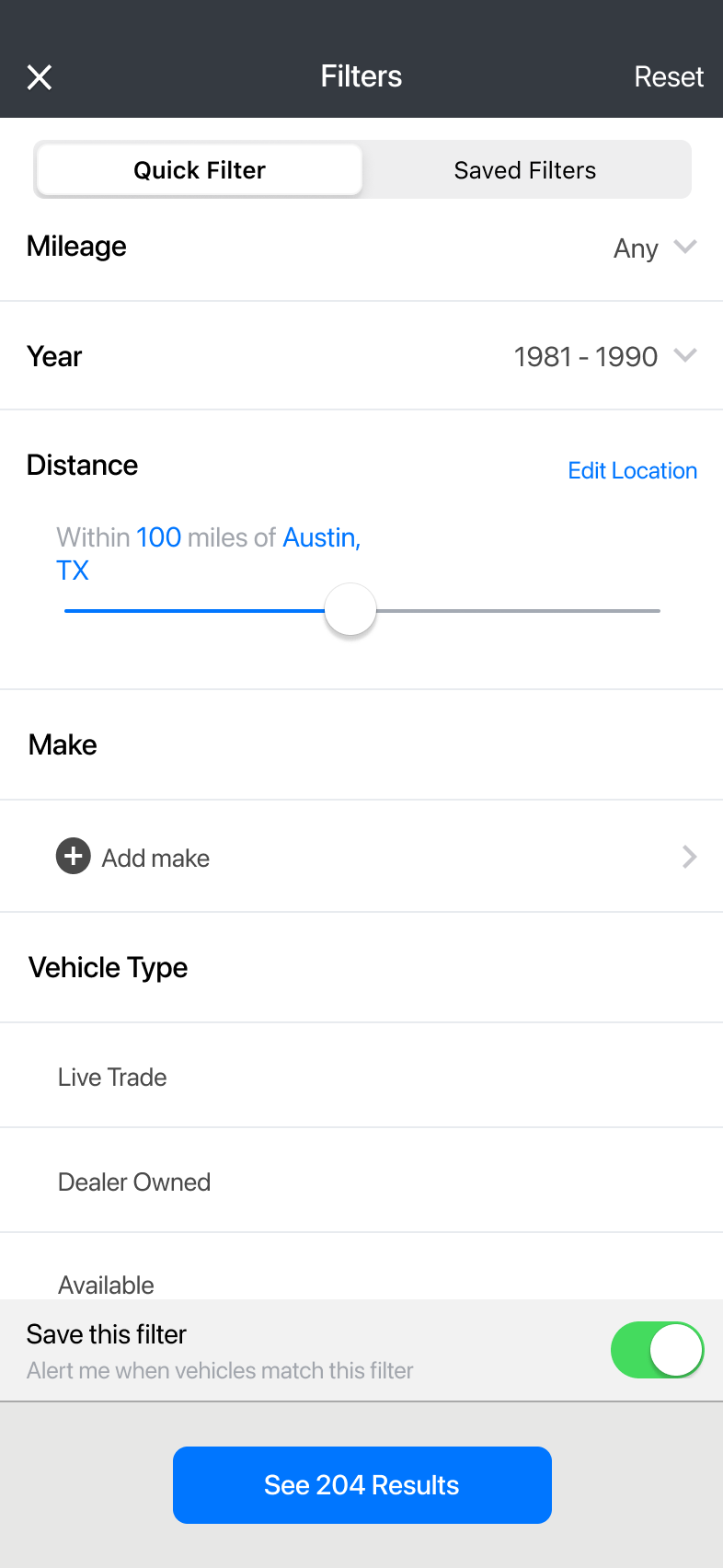
- Open Quick Filter and set vehicle criteria.
- Choose a make.
- Select all models or specific models, then return to Quick Filter.
- Enable Save this filter, view results, and name the filter when prompted.
- Open matching inventory, control notifications, or edit criteria from Saved Filters.
The goal was not simply to add more filters. It was to let a buyer describe a useful inventory strategy once and keep using it.
Swipe to explore all five steps.
01. Start with Quick Filter
Set vehicle criteria such as mileage, year, distance, and vehicle type. Open Make to choose a manufacturer.
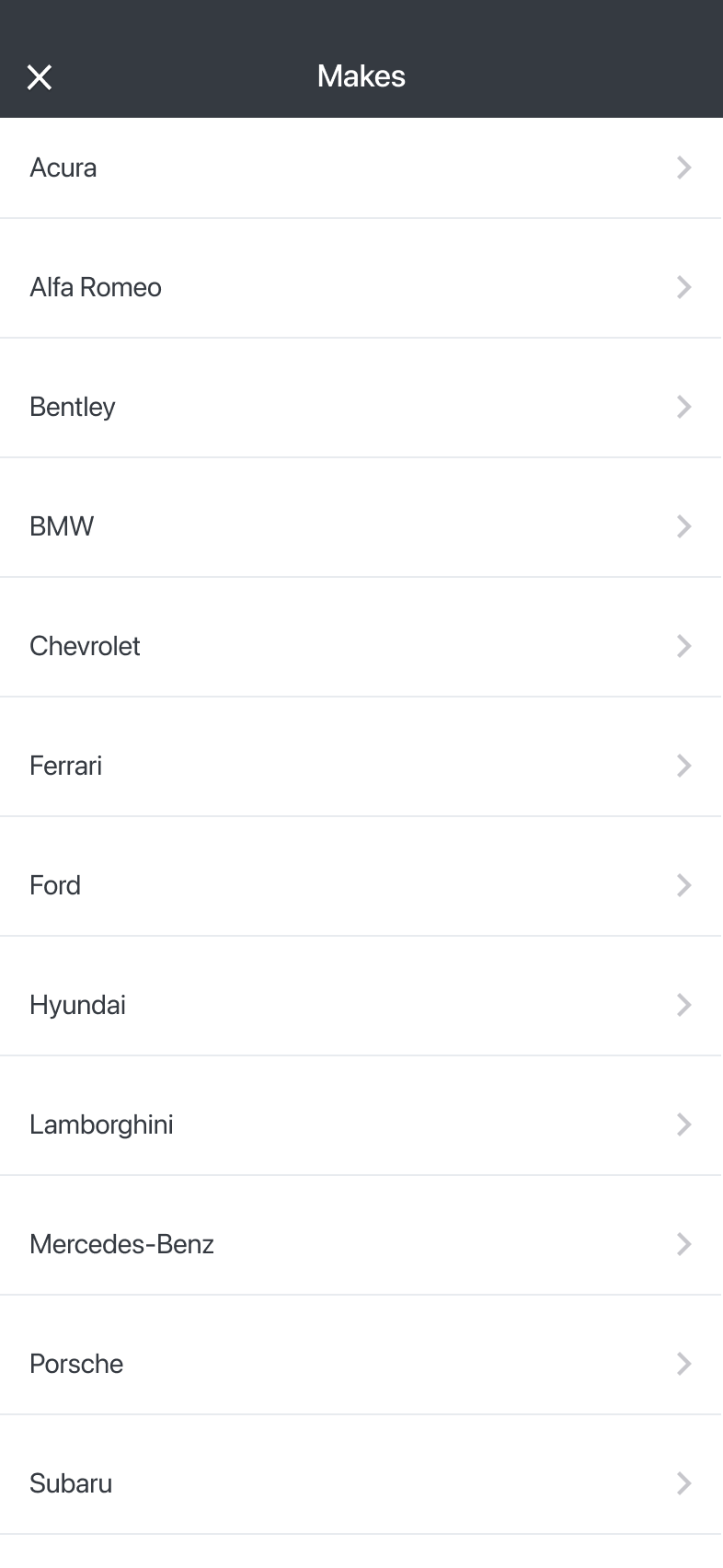
02. Choose a make
Select a manufacturer, such as BMW, to see its models.
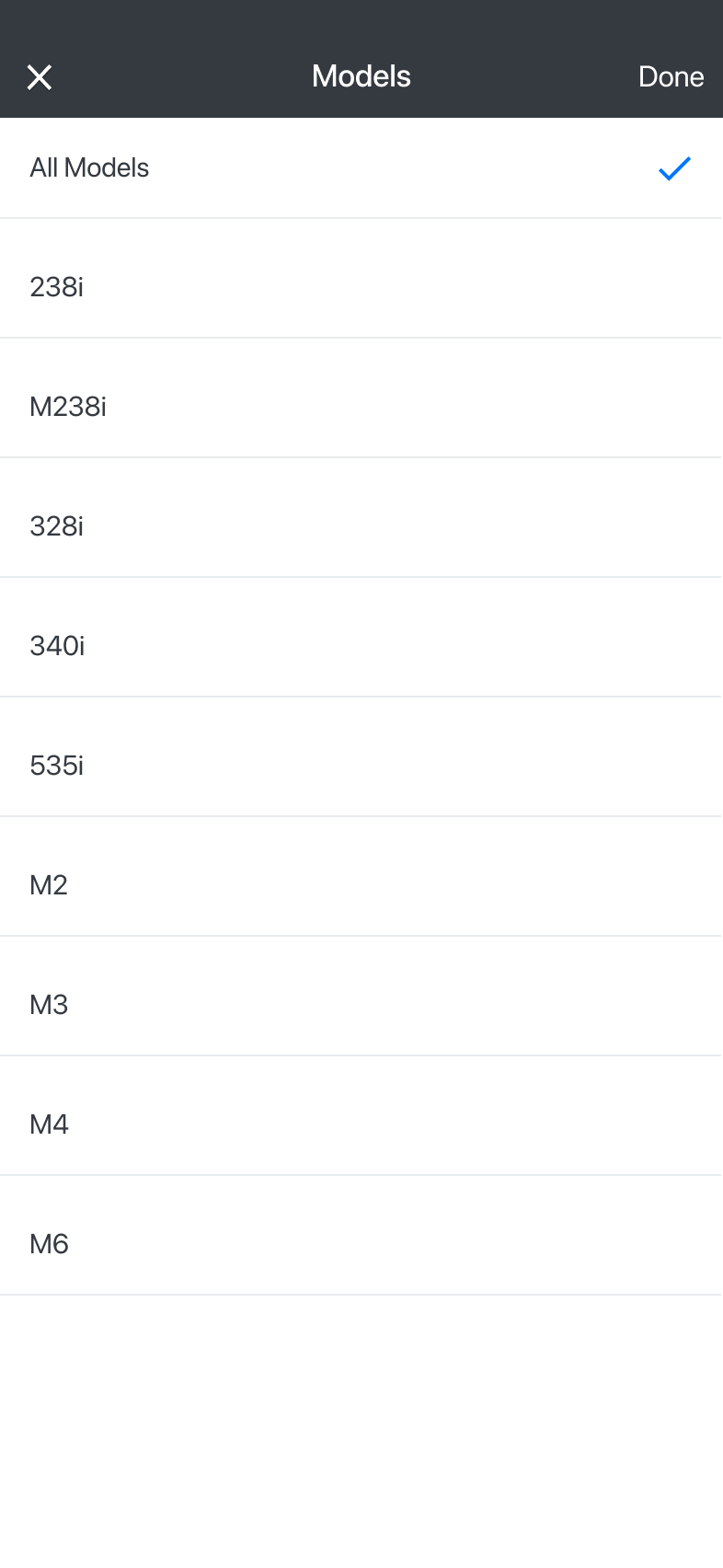
03. Select models
Choose all BMW models or specific ones, then tap Done to return to Quick Filter.
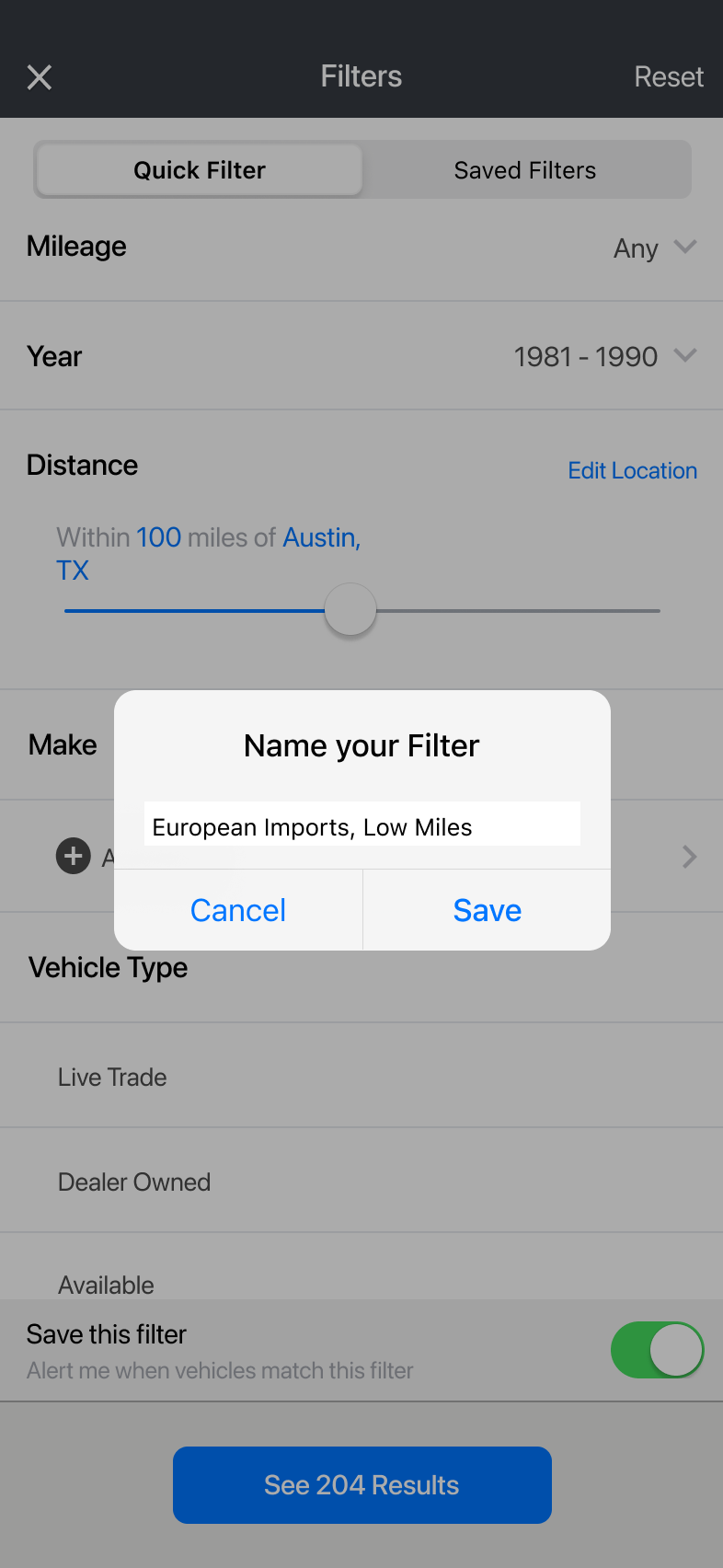
04. Name the filter
With Save this filter enabled, tapping the results button opens a prompt to name and save the filter.
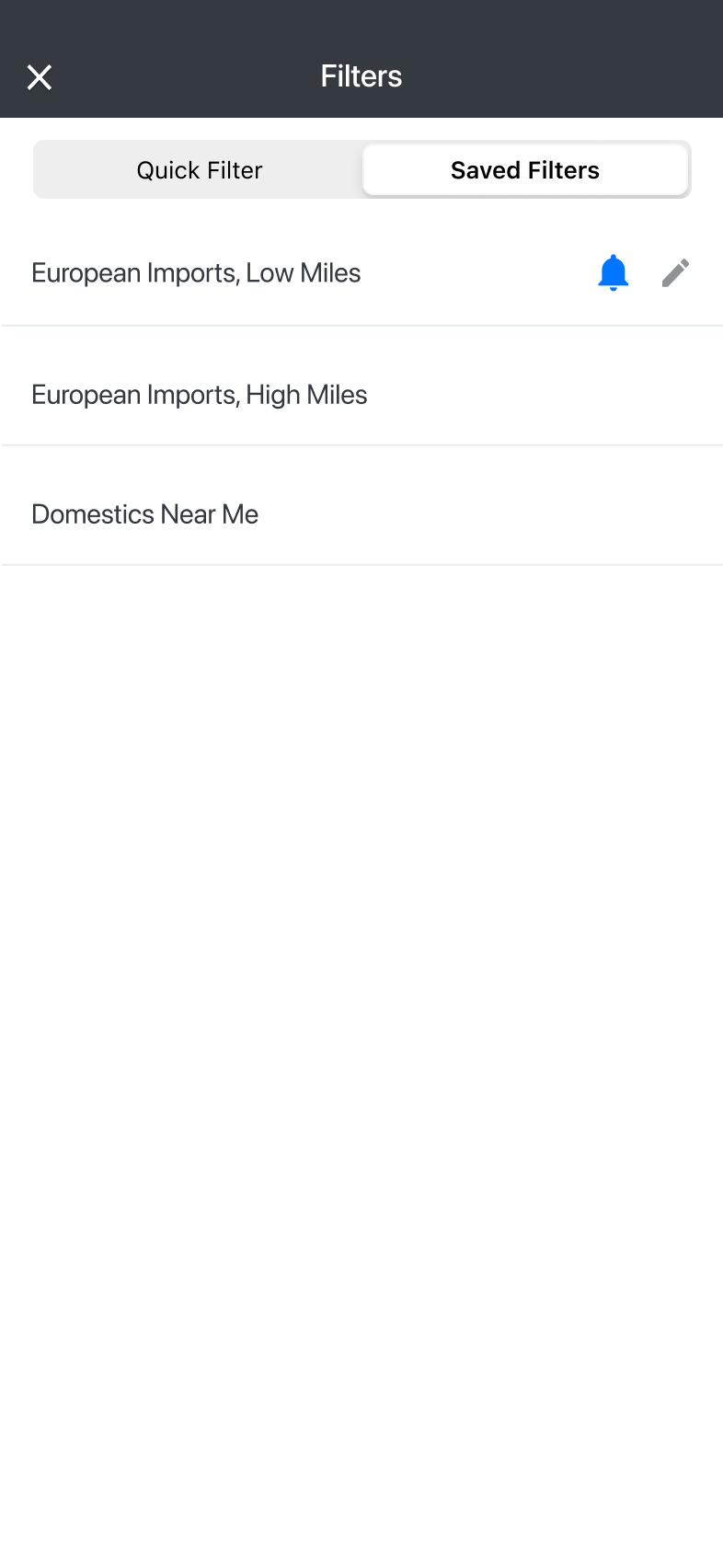
05. Reuse and manage
Tap the filter name to view matching vehicles. The bell controls notifications for new matches; the pencil opens editing.
06. Vehicle states
Designing for different vehicle states
The action available to a buyer depended on where a vehicle was in the appraisal process. I used status chips and state-specific actions to make that distinction visible.
Before a vehicle had been appraised
A buyer could submit a pre-bid, meaning the amount they would pay if The Appraisal Lane acquired the vehicle. Multiple buyers could submit prices. Once submitted, a pre-bid could not be changed, so the interface needed to make that commitment clear before submission.
Those bids appeared in the internal appraisal portal, ranked from highest to lowest and identified by buyer. If a bid aligned with the value the appraisal team wanted to place on the vehicle, an appraiser could select it. We effectively had the vehicle pre-sold at that price, assuming the dealership accepted our offer.
Selecting a pre-bid did not complete a transaction by itself. The dealership still had to accept The Appraisal Lane's offer. If it declined, the vehicle did not enter our inventory and no sale occurred.
After a vehicle had a value
For inventory that had already been appraised or purchased, the app showed the price The Appraisal Lane was seeking, which included the margin the business was targeting at the time. A buyer could mark interest, contact our team through the built-in conversation flow, negotiate, and coordinate transportation if a deal was reached.
A pre-bid could remain useful even when it was not initially selected. If another deal fell through or the vehicle later entered inventory, the disposition team could see who had already expressed interest and continue the conversation.
If a purchase was agreed upon, transportation could follow one of two paths. The buyer could arrange it independently, or they could work through chat with an account manager or disposition team member and ask The Appraisal Lane to shop transportation rates using its network across different regions.
Compare a pre-bid vehicle with priced inventory. Highlight status chips, primary actions, and the confirmation that a pre-bid cannot be changed.
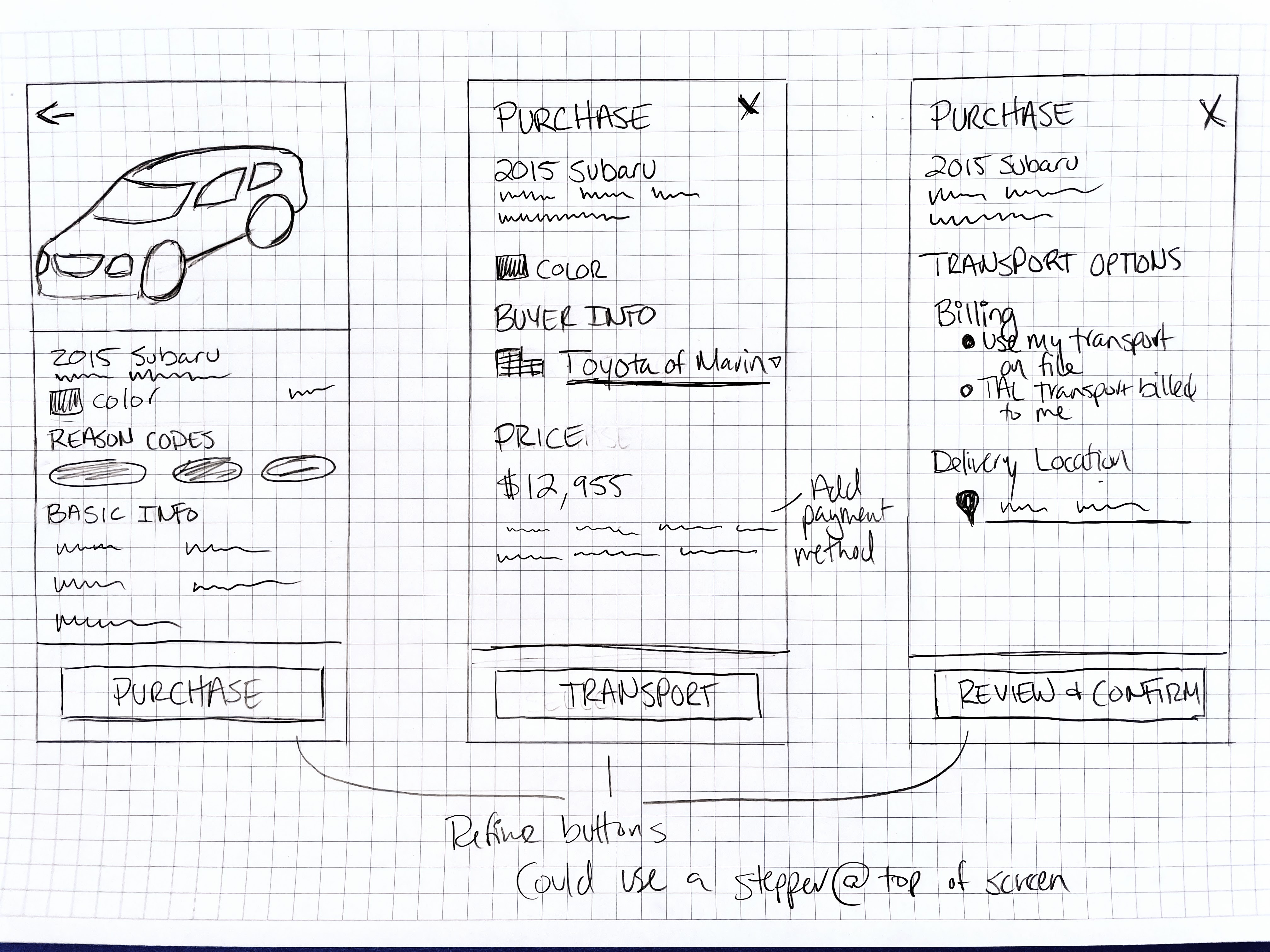
Exploring purchase and transportation
I also sketched a possible purchase flow with buyer information and transportation choices. This was an early concept, not a record of the final interaction. In the launched workflow described above, buyers and TAL coordinated the deal and transportation through conversations.
07. Connected workflows
Connecting the mobile and internal workflows
The pre-bid feature was not only a mobile interface. It crossed the entire product system.
The apps needed to submit a bid. The backend needed to store and return it. The administration portal needed to show all bids within the appraisal workflow and allow an appraiser to select one. The customer-facing team then needed enough context to follow up with the buyer.
I mapped that behavior across the products and broke the work into separate iOS, Android, API, and web tickets. I used Confluence to document the feature and its states, then reviewed it with the senior architect and engineers before the team committed to implementation.
That collaboration helped surface implementation constraints early while keeping the buyer experience and internal appraisal workflow connected.
Connect the mobile pre-bid screen to a simplified administration widget showing bids ranked by amount, buyer identity, and the selection action.
08. Launch
Shipping on iOS and Android
Every two weeks, the team demonstrated completed work to stakeholders, including sales and other people who worked directly with buyers. As the apps approached release, I walked those teams through the experience so they could help approved buyers install the app, access their accounts, and configure useful saved filters.
We launched TAL Buyers Network in both the Apple App Store and Google Play Store. Accounts were created internally, so the product remained limited to approved professional buyers rather than consumers browsing for personal vehicles.
I saw a small number of pre-bids come through after launch, but I left before we had reliable adoption or business-impact data. That early signal does not establish broader adoption or business impact.
The qualitative response was generally positive. People in automotive were accustomed to administrative products that felt old, slow, and difficult to use. Our software felt responsive, worked well on their phones, and stood out from the tools many of them dealt with every day. I do not have formal usability scores. A preserved launch-period review from GulfAuto provides a specific customer account, included in the outcomes below.

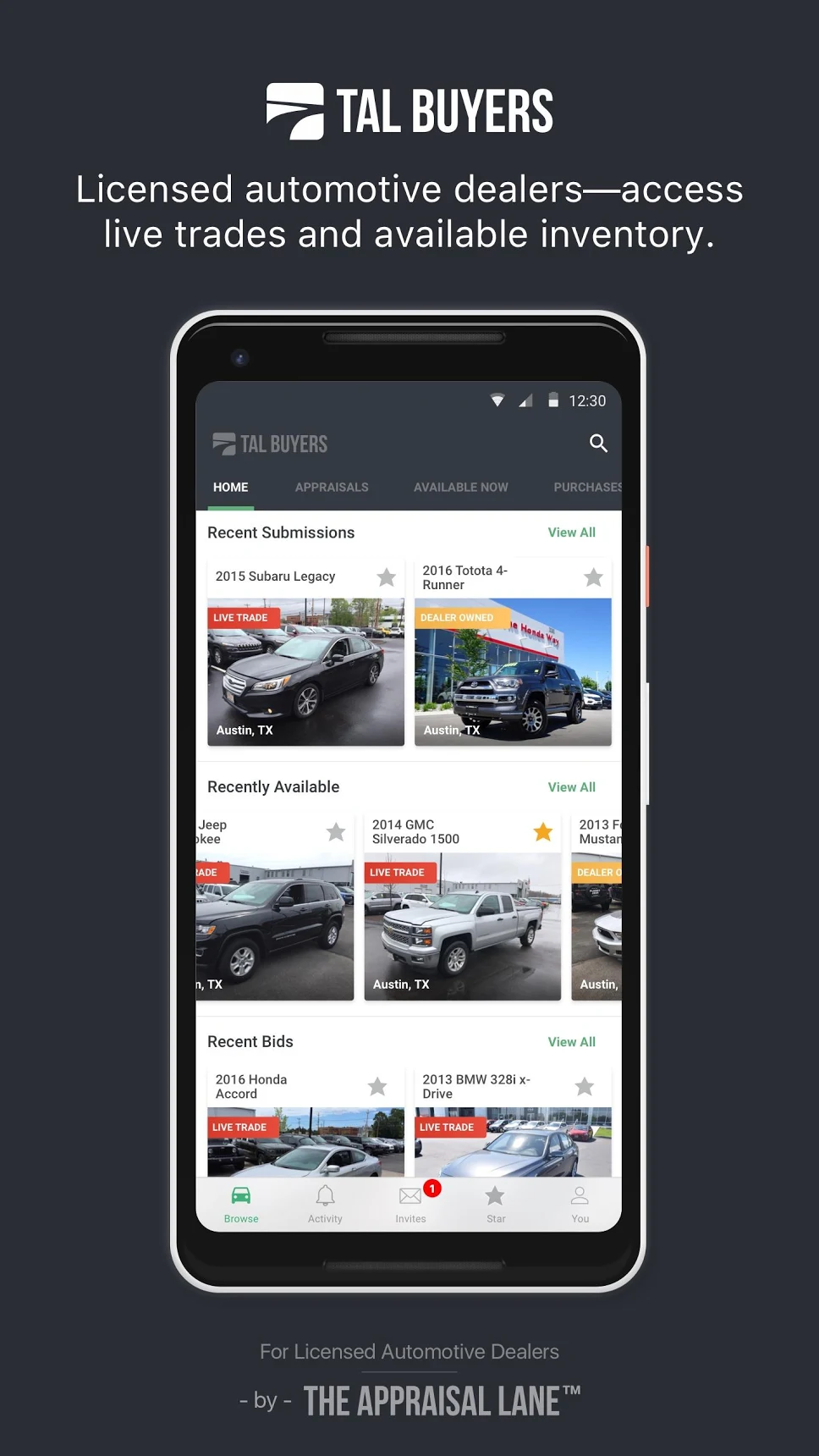
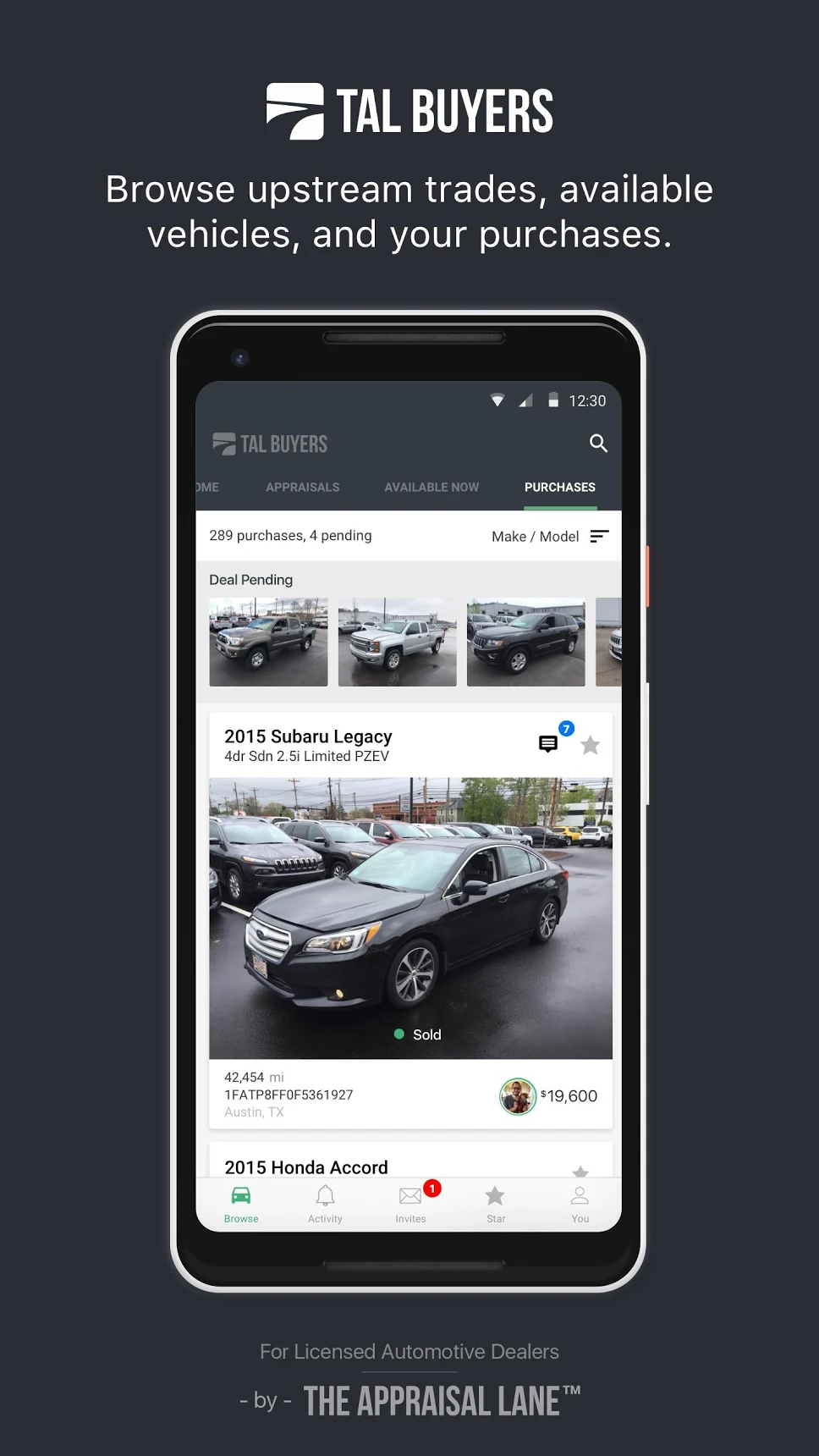
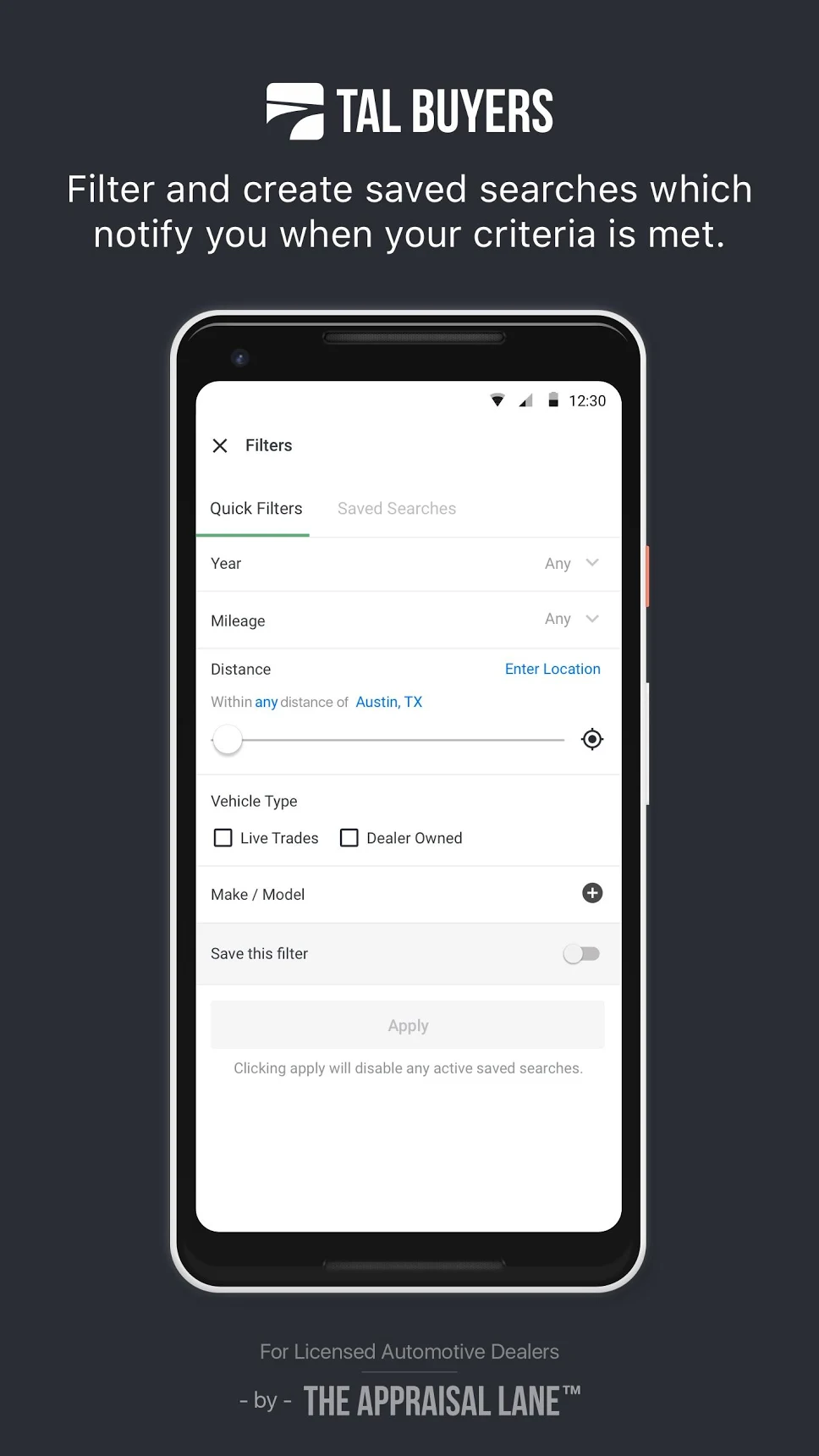
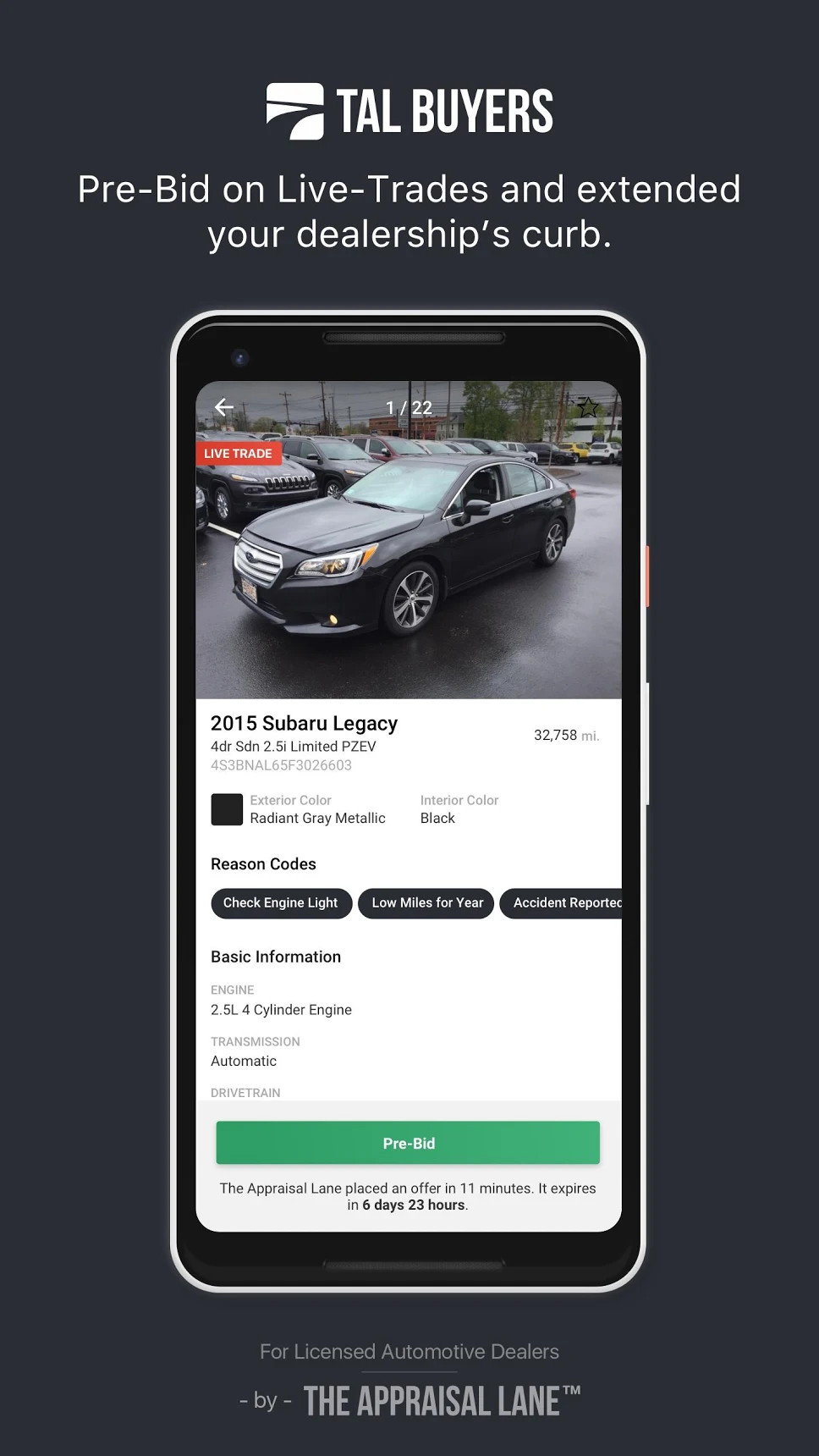
Original Google Play launch graphics for TAL Buyers Network.
09. Design foundation
Making the design files safer to change
The product work also exposed a separate design-operations problem.
Our web portal and existing mobile products lived inside one very large Sketch file shared through a synchronized Google Drive. By my recollection, it had grown to several gigabytes. Saving could crash our computers, and if two people worked in the file at the same time, one person's save could overwrite the other's work.
Before beginning the new Buyers Network designs, I asked the team to pause changes and took a weekend to reorganize the system. I separated the web administration experience, the existing appraisal app, and TAL Buyers Network into their own files. I also converted repeated one-off elements into reusable components, including cards, status chips, dashboard widgets, profile images, and common text variations.
The resulting files were far smaller, roughly 200 MB each by my recollection, and we stopped experiencing the same crashes and overwritten work.
As the design team grew, I introduced Abstract, which was essentially Git for Sketch, and established a weekly review process. Designers committed work to a branch, presented it to the team, recorded feedback against the commit, resolved changes, and merged approved work into the main file.
This was supporting work rather than the main product story, but it made the product easier for a growing team to maintain and change.
Compare one oversized shared Sketch file with separate product files, reusable components, and the Abstract branch, review, approval, and merge workflow.
10. Outcomes
A shipped product with early signs of buyer interest
TAL Buyers Network launched as a restricted marketplace for professional automotive buyers on iOS and Android. It brought inventory browsing, saved sourcing preferences, notifications, vehicle conversations, and state-specific pricing actions into a mobile workflow.
It also connected buyer interest back to the appraisal operation. Pre-bids could inform the value placed on a vehicle and give the disposition team a starting point if the vehicle entered inventory.
The measurable outcome I can stand behind is shipment. Both apps reached their stores, approved buyers were onboarded, and early pre-bids appeared in the system. I cannot credibly claim adoption growth, revenue impact, or a reduction in disposition time because that instrumentation and follow-through were not available to me before I left.
★★★★★
“Bought my first car yesterday and the whole process was quick with no pain points and the fee was way way cheaper than what I usually pay.”
View original review screenshot
This review documents one customer’s reported purchase experience. It does not establish overall adoption, conversion, or commercial impact.
11. Reflection
What I would measure today
If I were continuing the product today, I would instrument the complete path from buyer preference to vehicle disposition:
- Saved-filter creation and the most frequently selected attributes
- Notification delivery, opens, and vehicle views
- The percentage of matching vehicles that receive interest or a pre-bid
- Pre-bids selected by the appraisal team
- Seller acceptance after a pre-bid is selected
- Completed sales to the buyer who submitted the selected bid
- Time from appraisal submission to disposition, compared with a pre-launch baseline
These measures would show whether buyers were finding relevant inventory, whether alerts were producing meaningful action, and whether that activity helped the business move vehicles faster.